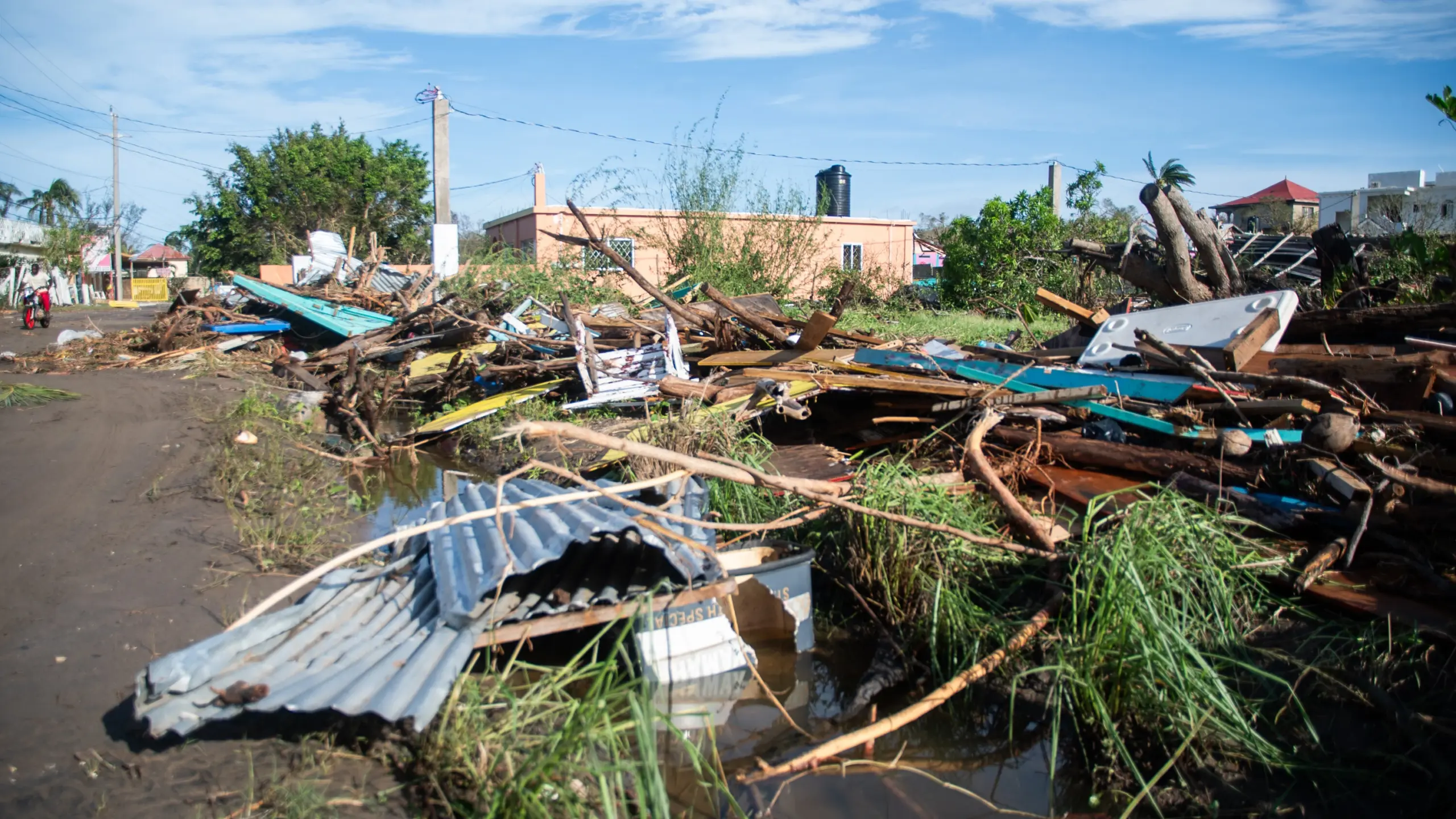
Hurricane Melissa struck southwestern Jamaica on October 28, 2025, as a Category 5 hurricane with sustained winds of 185 mph (295 km/h). The cyclone became the strongest hurricane on record to make landfall in Jamaica and one of the most intense Atlantic landfalls ever documented.
The storm damaged homes, hospitals, schools, roads, farms, electricity networks and water systems across the island. Around 1.6 million people were affected, while the estimated value of physical damage reached US$8.8 billion. Melissa also produced destructive winds, rainfall and flooding in Cuba, Haiti, the Dominican Republic and other parts of the Caribbean.
Hurricane Melissa’s Track Through the Caribbean
Melissa developed over the southern Caribbean on October 21, 2025. The system initially moved west before slowing and turning toward Jamaica, allowing it to strengthen over exceptionally warm water.
The cyclone’s progression was rapid:
| Date | Storm stage and location |
| October 21, 2025 | Melissa formed as a tropical storm over the southern Caribbean |
| October 26 | The system strengthened into a Category 4 hurricane |
| October 27–28 | Melissa reached Category 5 intensity south of Jamaica |
| October 28 | Landfall near New Hope in southwestern Jamaica |
| October 29 | Second landfall on the southern coast of eastern Cuba |
| October 29–30 | The hurricane moved through the Bahamas |
| October 31 | Melissa transitioned away from a tropical system over the North Atlantic |
At Jamaican landfall, the National Hurricane Center estimated maximum sustained winds of 185 mph and a minimum central pressure of 892 millibars. The centre crossed the mountainous western section of Jamaica, weakening substantially before emerging from the island’s northern coast.
Melissa later reached eastern Cuba near Chivirico. Although weaker than at its Jamaican landfall, it remained a dangerous hurricane capable of producing destructive winds, storm surge and intense rain.
Why Hurricane Melissa Was Historic
Hurricane Melissa was the first recorded Category 5 hurricane to make landfall in Jamaica. Its 185 mph winds also placed it alongside the strongest Atlantic hurricane landfalls measured by sustained wind speed.
The storm exceeded Hurricane Gilbert, which struck Jamaica in September 1988 and had long served as the country’s reference point for extreme hurricane damage.
Melissa was exceptional for three connected reasons.
First, the cyclone intensified rapidly over the Caribbean Sea. A storm that strengthens quickly gives communities less time to adjust once preparations are already underway.
Second, Melissa approached Jamaica at close to peak intensity. Many powerful hurricanes weaken before reaching land because of wind shear, cooler water or changes in their internal structure. Melissa retained an exceptionally organised core until landfall.
Third, the hurricane crossed western Jamaica, where communities, agricultural areas and tourism infrastructure were directly exposed to its eyewall. Mountainous terrain weakened the circulation after landfall, but it also increased the risk of flash flooding and landslides.
Damage Across Jamaica
Western and southern parishes suffered the most severe destruction. St. Elizabeth, Westmoreland, Hanover, St. James, Trelawny and Manchester faced combinations of extreme wind, flooding, damaged buildings and prolonged service disruption.
Approximately 77% of customers lost electricity at the height of the crisis. Water services shut down completely in parts of Hanover and Westmoreland, while St. James and St. Elizabeth experienced major interruptions.
More than 156,000 homes required repairs in western Jamaica. Some buildings lost roofs or suffered water damage; others were no longer safe to occupy. Six weeks after landfall, roughly 90,000 households—about 279,000 people—were still unable to return home.
The displacement figure was much higher than the number remaining inside official shelters. Many residents stayed with relatives, moved into informal accommodation or remained close to damaged properties while waiting for repairs. This distinction matters: shelter occupancy alone did not show the full scale of housing displacement.
Hospitals, Schools and Public Services
At least 135 health facilities were damaged, including five major hospitals. Electricity instability, water shortages, damaged roofs and interrupted communications reduced the ability of medical teams to provide normal services.
Hundreds of education facilities were also affected. Damage to schools created two separate problems: children lost access to classrooms, while some school buildings were needed as emergency shelters.
Road damage, fallen trees and flooding isolated communities during the first phase of the response. Even where aid supplies were available nationally, blocked routes slowed their delivery to individual towns and villages.
The Human and Economic Cost
The final regional assessment attributed more than 90 deaths to Hurricane Melissa. Jamaica confirmed 45 deaths, with additional fatalities recorded in Haiti and other affected territories.
The number of people “affected” should not be confused with the number killed, injured or displaced. An affected person may have experienced a power cut, loss of water, damage to a livelihood, destruction of a home or interruption of health and education services.
Jamaica’s physical damage was estimated at US$8.8 billion. That was roughly two-fifths of the country’s annual economic output and made Melissa the costliest hurricane in Jamaica’s recorded history.
Physical damage includes destroyed or impaired assets such as buildings, roads and utility systems. It does not necessarily capture every lost hotel booking, missed workday, destroyed crop, business interruption or long-term health consequence. The storm’s total economic effect could therefore differ from the physical-damage estimate.
Housing Was Only the First Recovery Challenge
Rebuilding a damaged house does not automatically restore a household’s previous life. Families also needed electricity, clean water, transport, income and access to schools and healthcare.
Agricultural losses affected both farmers and consumers. Western Jamaica produces crops used throughout the country, and hurricane damage disrupted farms, storage, roads and local supply chains. Lost harvests reduce farmers’ incomes while placing upward pressure on food availability and prices.
Tourism faced a different recovery problem. Large resorts may have access to insurance, generators and specialist contractors, while small guesthouses, restaurants, drivers and vendors often have fewer financial reserves. A destination can technically reopen while many local workers remain under economic pressure.
The practical pace of recovery therefore differed sharply between communities. Restoring a national power statistic to a high percentage did not mean every rural household, clinic or business had returned to normal.
Public Health Risks Continued After Landfall
Floodwater, damaged sanitation systems and interruptions to safe water supplies created risks that remained after the wind had passed.
Jamaica declared a leptospirosis outbreak one month after the hurricane. Leptospirosis is a bacterial illness that can spread when water or soil becomes contaminated with urine from infected animals. Flooding increases exposure because residents and cleanup workers may come into contact with contaminated water through cuts, eyes, the nose or mouth.
Mosquito breeding also became a concern in areas with stagnant water. Health authorities continued dengue surveillance while damaged clinics and disrupted transport made routine care more difficult.
The safest post-hurricane precautions included avoiding floodwater where possible, covering cuts, using protective footwear during cleanup, treating uncertain drinking water and seeking medical help for fever or other symptoms after exposure.
Hurricane Melissa in the Dominican Republic and Haiti
Melissa did not need to make direct landfall on Hispaniola to create a major emergency. Its broad rainbands produced persistent rainfall over the Dominican Republic and Haiti while the centre remained over the Caribbean.
In the Dominican Republic, flooding and landslides affected southern and central provinces. Dozens of aqueducts stopped operating, leaving more than one million people with disrupted access to safe water. Roads and bridges were damaged, and dozens of communities became temporarily isolated.
Agricultural losses included plantain, cassava and coffee crops. When a storm damages both water infrastructure and farmland, the effects reinforce each other: households face immediate sanitation risks while also losing food production and income.
Haiti experienced deadly flash floods and landslides. Existing displacement, food insecurity, weak infrastructure and limited access to public services made recovery especially difficult. Heavy rain could cut off communities even when the hurricane’s strongest winds remained far offshore.
The regional impact shows why hurricane categories cannot describe the complete danger. The Saffir–Simpson scale measures sustained wind speed, not rainfall, landslide probability, flood exposure or the condition of local infrastructure.
Hurricane Melissa’s Impact on Cuba
Melissa reached southeastern Cuba on October 29 after crossing Jamaica. Authorities carried out large-scale evacuations before landfall, but eastern provinces still experienced severe wind, rain and housing damage.
Later assessments indicated that approximately 215,000 homes were damaged or destroyed. Water, healthcare, agriculture and food storage were affected alongside the housing sector.
Cuba’s existing fuel and electricity shortages complicated recovery. Water trucking, hospital operations, refrigeration and debris clearance all require dependable energy. When fuel supplies are limited, restoring one service can depend on another service that is also failing.
Post-storm conditions also increased pressure from mosquito-borne diseases, including dengue, chikungunya and oropouche. The hurricane did not create these diseases, but standing water, damaged housing and interrupted public services made control more difficult.
Was There a Hurricane Melissa in 2026?
There was no new Hurricane Melissa in 2026. Hurricane Melissa formed and struck the Caribbean in October 2025.
Searches for Hurricane Melissa 2026 generally refer to humanitarian reports, reconstruction updates and later assessments published during 2026. The year attached to a report is not necessarily the year in which the storm occurred.
In March 2026, the World Meteorological Organization retired the name Melissa because of the hurricane’s death toll and destruction. Retired names are removed from the Atlantic system so they are not reused for a future cyclone.
The replacement name Molly is scheduled to enter the Atlantic list in 2031. As a result, there will not be another Atlantic hurricane officially named Melissa under the current naming system.
Why Some Melissa Statistics Do Not Match
Reports issued immediately after a disaster are based on incomplete assessments. Figures change as authorities reach isolated communities, inspect buildings and distinguish confirmed deaths from missing-person cases.
Different organisations may also measure different things:
- Exposed population means people living within an area reached by wind, rain or flooding.
- Affected population includes people who experienced some form of disruption or loss.
- Displaced population refers to people unable to remain in or return to their usual homes.
- Evacuated population counts people moved before or during the emergency.
- Physical damage values destroyed assets.
- Economic loss may also include reduced production, income and business activity.
A figure of 1.6 million people affected in Jamaica does not mean 1.6 million people lost their homes. Likewise, the hundreds of thousands evacuated in Cuba should not automatically be counted as permanently displaced.
When comparing Hurricane Melissa reports, the publication date, geographic scope and definition of each figure are as important as the number itself.
Early Warnings Reduced a Potentially Greater Death Toll
Forecast agencies identified the threat before Melissa reached Jamaica, allowing authorities to close airports, activate shelters, pre-position supplies and order evacuations in exposed locations.
Those actions could not prevent buildings from being destroyed by Category 5 winds. They did reduce the number of people caught without warning.
Melissa demonstrated the difference between hazard and disaster risk. The hurricane’s physical power was unavoidable once it had formed, but the eventual human toll depended partly on forecasting, communication, shelter access, building quality and whether residents were able to act on warnings.
The storm also exposed limits. Some people were reluctant or unable to leave, while others lacked transport or did not believe their area would suffer catastrophic damage. Opening hundreds of shelters is useful only when residents can reach them, trust them and receive clear information about why evacuation is necessary.
What Hurricane Melissa Left Behind
Hurricane Melissa ended as a meteorological system in late October 2025, but the disaster continued through 2026. Housing repairs, damaged farms, health risks and unreliable public services kept hundreds of thousands of people from returning quickly to normal life.
For Jamaica, the lasting test is not only how fast electricity and tourism operations return. Recovery must also be measured by whether displaced families obtain durable housing, damaged schools reopen, water systems become more resilient and small businesses survive the interruption.
Melissa’s name has been retired, but the conditions that made the disaster so damaging remain relevant across the Caribbean. Future preparedness will depend on stronger buildings, protected water networks, reliable warning systems and recovery financing that reaches vulnerable households before the next major hurricane arrives.