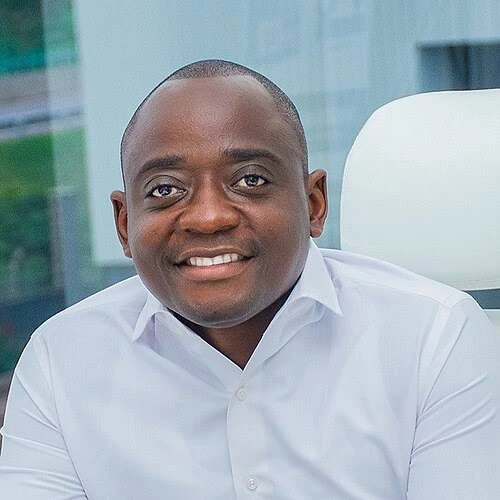
As of July 2026, no official, audited national rich list can settle the question. The clearest current published estimate places Hamis Kiggundu first, with an indicative asset value of about US$1.35 billion. Sudhir Ruparelia remains the strongest long-term rival and the name most often identified in established business coverage, with a diversified group spanning property, hospitality, education, insurance, floriculture and media.
The best answer therefore depends on how “richest” is measured. Kiggundu leads the latest asset-based estimate. Ruparelia has the longer public record and a more historically documented claim. Neither figure is a personal financial declaration, so it should not be presented as an exact, audited net worth.
Why Hamis Kiggundu Leads the Current 2026 Estimate
Hamis Kiggundu is the richest man in Uganda under a February 2026 asset-based ranking that valued his holdings at approximately US$1.35 billion. The estimate is built around the property, development and operating businesses associated with the Ham Group of Companies.
The group describes its activities as covering real estate, property development, agro-processing, education, hospitality, logistics, technology and general merchandise. Its visible assets include commercial developments in Kampala, residential projects, sports infrastructure and planned industrial ventures.
Property is the central valuation driver. Commercial buildings can produce recurring rental income while the underlying land may appreciate over time. That combination can create substantial paper wealth, especially in high-demand parts of Kampala. Kiggundu’s expansion into agro-processing and digital services adds potential growth beyond rent-producing property.
The largest uncertainty is valuation. A completed, occupied building with documented rental income can be assessed more confidently than undeveloped land, a project under construction or a new business that has not yet established stable revenue. A headline asset value also does not reveal debt, minority partners, financing obligations or the proportion of each asset personally owned by Kiggundu.
For that reason, the US$1.35 billion figure is best described as a published estimate, not a confirmed personal fortune.
Why Sudhir Ruparelia Is Still Widely Called Uganda’s Richest Man
Sudhir Ruparelia has the most established international claim to the title. Forbes previously identified him as Uganda’s richest man and recorded a net worth of US$800 million in its 2015 Africa rich list. More recent media estimates have placed him around or above US$1 billion, but those figures are not backed by a current public Forbes valuation or an audited personal balance sheet.
Ruparelia’s case rests on the breadth and maturity of the Ruparelia Group. The group traces its origins to a foreign-exchange business started in 1985 and later expanded into real estate, hospitality, education and agriculture. Its current portfolio also includes media, floriculture, insurance and financial services.
This diversification matters. A fortune supported by offices, hotels, schools, flower exports, insurance operations and media assets is less dependent on one development or one market segment. Long-established operating companies can also be easier to analyse than projects whose future cash flow remains uncertain.
Even so, private ownership limits visibility. The market value of buildings, the profitability of individual companies, outstanding liabilities and the exact ownership structure are not fully disclosed to the public. Sudhir Ruparelia may be Uganda’s best-documented wealth holder, but his present personal net worth still cannot be calculated precisely from public information alone.
The 2026 Estimate of Uganda’s Richest People
The following table summarises a February 2026 asset-based estimate of the richest people in Uganda. The numbers are based on reported assets and business interests. They are not audited declarations, and the plus sign indicates that the original estimate treated the value as a minimum or open-ended figure.
| Rank | Businessperson | Published estimate | Main business exposure |
| 1 | Hamis Kiggundu | About US$1.35 billion | Real estate, property development, agro-processing, technology and education |
| 2 | Sudhir Ruparelia | About US$1.2 billion | Real estate, hospitality, education, insurance, floriculture and media |
| 3 | John Bosco Muwonge | US$850 million+ | Kampala commercial property |
| 4 | Drake Lubega | US$800 million+ | Commercial real estate, industrial assets and education |
| 5 | Mansour Matovu | About US$785 million | Commercial property and logistics-linked investments |
| 6 | Karim Hirji | US$785 million+ | Hospitality, property, automotive distribution and finance |
| 7 | Christine Nabukeera | US$710 million+ | Commercial and residential real estate |
| 8 | Tom Kitandwe | US$700 million+ | Commercial property, land, agribusiness and telecom-linked investments |
| 9 | Guster Lule Ntake | US$670 million+ | Hospitality, agriculture, manufacturing and property |
| 10 | Godfrey Kirumira | US$615 million+ | Petroleum distribution, property, hospitality and telecom infrastructure |
| 11 | Charles Mbire | US$600 million+ | Telecommunications, energy, finance and corporate investments |
| 12 | Amos Nzeyi | US$550 million+ | Beverage manufacturing, food production and hospitality |
| 13 | Ahmed Omar Mandela | US$535 million+ | Fuel retail, restaurants, milling and automotive distribution |
| 14 | Haruna Sentongo | US$490 million+ | Urban commercial property and market redevelopment |
| 15 | Patrick Bitature | US$220 million+ | Telecommunications distribution, energy, hospitality and real estate |
This table should be read as a map of prominent private capital, not as a verified league table. Small changes in property assumptions, debt estimates, exchange rates or ownership percentages could reorder several positions.
Why Uganda’s Billionaire Rankings Differ So Much
The phrase “Uganda billionaires” suggests a level of precision that the available data rarely supports. Most leading fortunes are held through private companies, family structures and physical assets rather than transparent portfolios of publicly traded shares.
Several valuation problems appear repeatedly.
Asset Value Is Not the Same as Personal Net Worth
A building worth US$50 million does not automatically add US$50 million to one person’s net worth. The property may be mortgaged, jointly owned or held by a company with other liabilities. Net worth requires subtracting debt and allocating only the owner’s actual economic interest.
Group Revenue Is Not the Owner’s Wealth
A company can generate hundreds of millions of dollars in sales while producing a much smaller profit. Revenue also belongs to the company, not directly to the shareholder. Treating turnover as personal wealth can inflate rankings dramatically.
Land Estimates Depend on Assumptions
Kampala property is a major source of private wealth, but two valuers can reach different conclusions about the same site. Location, permitted use, occupancy, lease terms, redevelopment potential and market liquidity all affect the result.
Future Projects Are Easy to Overvalue
An announced industrial park, fintech platform or housing development may become valuable, but an unfinished or pre-revenue project should not be valued like an established operating business. Construction risk, financing requirements and customer demand still matter.
Private Debt Is Largely Invisible
A person may control valuable assets while also carrying substantial loans, guarantees or supplier obligations. Without debt information, an asset-only model can overstate the owner’s economic position.
These limitations explain why one article may name Hamis Kiggundu as the richest person in Uganda while another still places Sudhir Ruparelia first.
How Uganda’s Largest Fortunes Were Built
The ranking reveals more about Uganda’s business structure than the exact order of names.
Commercial Property Remains the Dominant Wealth Engine
A large share of the listed fortunes is tied to arcades, shopping centres, offices, hotels, markets and land in Kampala. Prime urban property combines rental cash flow with long-term appreciation. It also provides collateral that can support further borrowing and development.
John Bosco Muwonge, Drake Lubega, Mansour Matovu, Christine Nabukeera and Haruna Sentongo are presented primarily as property-led investors. Their estimated wealth depends heavily on occupancy, rental collections and the value assigned to central Kampala land.
Distribution Created Cash for Diversification
Fuel, vehicles, telecom products and consumer goods have generated the operating cash behind several business empires. Distribution businesses can scale faster than property because they produce frequent transactions, but they are exposed to import costs, currency movements, regulation and narrow margins.
Godfrey Kirumira and Ahmed Omar Mandela are associated with petroleum distribution, while Patrick Bitature’s early growth was linked to telecom distribution. The strongest operators then moved cash into property, hospitality, energy or manufacturing.
Manufacturing Provides a Different Form of Value
Amos Nzeyi’s association with Crown Beverages illustrates a more industrial route to wealth. Manufacturing value depends on production capacity, brand agreements, distribution reach, input costs and consumer demand rather than land appreciation alone.
Guster Lule Ntake and Ahmed Omar Mandela are also linked to food processing or milling. These businesses can create scalable operating income, although they face commodity-price and supply-chain risks.
Telecom and Digital Finance Make Some Wealth Easier to Track
Publicly listed shares offer more visibility than private buildings or family companies. Charles Mbire chairs MTN Uganda, a listed company that publishes annual financial reports. Market prices can provide a current value for disclosed shareholdings, although they still reveal only one part of a wider portfolio.
Kiggundu’s technology and payments ventures show how newer fortunes may add digital infrastructure to a traditional property base. The value of such businesses depends less on physical assets and more on active users, transaction volumes, regulation, technology costs and sustainable revenue.
Uganda’s Wealth in Economic Context
World Bank data place Uganda’s 2025 gross domestic product at approximately US$61.99 billion, with GDP per capita of about US$1,206 and annual growth of 6.3 percent.
Comparing private fortunes with national GDP can illustrate scale, but the comparison has limits. GDP measures the value produced across the economy during one year. Net worth measures the value of assets accumulated over many years after liabilities. They are different concepts and should not be treated as directly interchangeable.
The more useful observation is that Uganda’s largest fortunes are concentrated in sectors where ownership can compound: central-city land, commercial buildings, distribution networks, telecom equity, manufacturing capacity and hospitality assets. These forms of capital can grow faster than wages because they generate income and can be used to finance additional investment.
Oil development, digital payments, urban expansion and industrial projects may change the composition of future rankings. The next generation of wealthy Ugandans may hold more value in technology, energy and scalable regional businesses, but property will probably remain important because it underpins both income and borrowing capacity.
The Most Accurate Way to Answer the Question
For a one-sentence response, Hamis Kiggundu ranks as the richest man in Uganda in a February 2026 asset-based estimate, at approximately US$1.35 billion.
The necessary qualification is that the figure is unaudited. Sudhir Ruparelia remains the most widely documented long-standing contender and may still lead under a methodology that places more weight on mature operating businesses, liabilities and conservative asset values.
Any definitive claim that one individual has an exact personal fortune should therefore be treated cautiously. The credible answer is not simply a name and a number; it is a name, the valuation method and a clear statement of what remains unknown.